
Lysosomal Storage Disorders: Gaucher and Fabry Disease
There are thousands of known genetic disorders, and the faculty and staff of the Greenwood Genetic Center (GGC) have provided care, testing, and support for families impacted by many of these rare and common diseases.
One group of rare genetic disorders for which the Center has a great deal of experience and expertise is lysosomal storage disorders.
What are Lysosomal Storage Disorders?
Lysosomes are structures within cells that contain digestive enzymes. They play an important role in the body. Lysosomes break down excess carbohydrates, lipids, proteins, and nucleic acids and support the body’s immune response against foreign substances such as bacteria, viruses, and other antigens.
When one of these enzymes is missing, or present in very low levels, the cell cannot break down these excess molecules, so they build up causing a myriad of issues.
There are more than 70 known types of lysosomal disorders. Individually, each of these disorders is considered rare. However, as a group, they affect approximately one in 8,000 births.
How Does GGC Support Families with Lysosomal Storage Disorders?
 GGC provides comprehensive care for patients with lysosomal storage disorders. This includes educating and counseling patients on their diagnosis, making appropriate referrals, coordinating multidisciplinary interventions, and providing timely access to life-saving treatment.
When a patient is suspected of having a lysosomal storage disorder, or when there is a family history, GGC’s Diagnostic Labs offer several testing methodologies to help make the diagnosis or determine which family members may be carriers of these gene variants. These tests include metabolite screening, enzyme analysis, and DNA sequencing.
Newborns in South Carolina are currently screened for a few lysosomal storage disorders at birth including Pompe disease, Krabbe disease, and Mucopolysaccharidosis, type 1. When a newborn screens positive for one of these disorders, GGC’s laboratories assist in confirming or ruling out the diagnosis, and our metabolic treatment team helps manage follow-up care and treatment.
Gaucher disease and Fabry disease are two of the most common lysosomal storage disorders.
What is Gaucher Disease?
Gaucher disease is a rare genetic metabolic disorder caused by a deficiency of the enzyme glucocerebrosidase (GCase). The lack of this enzyme causes a buildup of fat known as lipids, particularly the glycolipid, glucocerebroside, throughout the body. The accumulation is typically found within the bone marrow, spleen, and liver. The lipid buildup causes these organs to enlarge and can affect their function. Bone density weakens and, if the disease affects the marrow, the blood can lose its ability to clot.
Many complications are associated with Gaucher disease and the buildup of excessive lipids. Among them are delayed growth and puberty, weakened bones and fractures, damage to the brain and spinal cord, bone and joint pain, mobility issues, anemia and easy bleeding, and fatigue.
Gaucher is an autosomal recessive disorder, meaning both parents must carry the altered glucocerebrosidase (GBA) gene and pass it to their child in order for them to be affected.
There are three types of Gaucher disease.
- Type 1 is the most common form of Gaucher disease affecting about 90% of patients. It can manifest at any age and is typically defined by a lack of platelets in the blood. It can impact the liver and spleen, as well as the kidneys, lungs, and skeletal system. Type 1 is more commonly found among people of Ashkenazi Jewish heritage.
- Type 2 is typically diagnosed in infants between the ages of three and six months and presents with severe nervous system involvement. This type of Gaucher disease typically results in death by the age of two.
- Type 3 affects the skeletal system and includes eye movement disorders, progressively worsening seizures, blood disorders, breathing issues, and enlargement of the liver and spleen.
Diagnosis and Testing
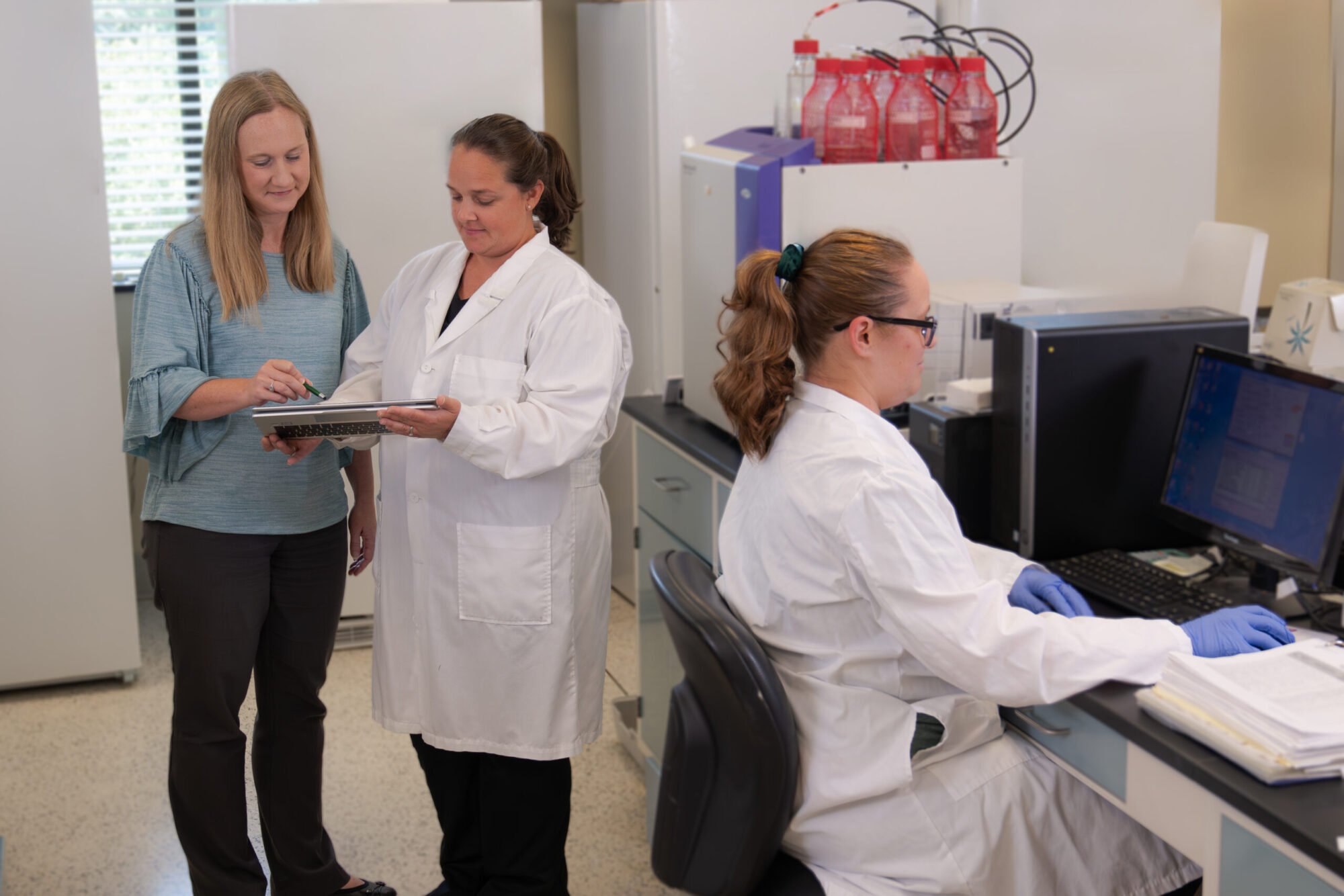 Blood tests can identify decreased levels of the GCase enzyme, which causes Gaucher disease.
Genetic testing can also be performed using a blood or saliva sample to identify mutations in the GBA1 gene that causes the disease. This type of testing can identify affected individuals, as well as those who are carriers of the genetic change.
X-rays can assess bone density and MRIs can determine if there is enlargement of the liver and spleen. MRIs can also show if bone marrow is affected.
Treatment
There is no cure for Gaucher disease, but treatment options exist to help control symptoms including:
- Enzyme replacement therapy (ERT) which replaces the deficient enzyme, usually through an intravenous (IV) infusion, is available for patients with Gaucher Types 1 and 3. Cerezyme, Elelyso, and VPRIV are three ERTs currently available in the US.
- Substrate reduction therapy in the form of an oral medication, Cerdelga (eliglustat), is available for patients with Gaucher, Type 1
- Hematopoietic stem cell transplantation for severe Gaucher disease may be used in patients with Gaucher, Type 3. It is not recommended for patients with Type 2.
- Physical exams and bone density screening
- Bone marrow transplant
- Joint replacement surgery
- Blood transfusions
What is Fabry Disease?
Fabry disease is caused by a deficiency of alpha-galactosidase A (alpha-GAL), an enzyme that breaks down a fatty substance known as sphingolipids. Without the ability to break down these substances, dangerous amounts can collect in various organs, including the heart, kidneys, brain, central nervous system, and skin.
A buildup of sphingolipids due to Fabry disease can lead to several complications. Fabry disease can lead to many heart-related issues, including an enlarged heart, arrhythmia, heart attacks, and heart failure. It can also lead to kidney failure, abdominal discomfort, painful nerve damage, abnormal sweating, skin findings, and stroke.
There are two types of Fabry disease, Classic and Late-onset.
- Classic Fabry disease symptoms appear during childhood or the teenage years.
- Late-onset or atypical Fabry symptoms typically do not appear until patients are in their 30s or older.
Fabry disease is X-linked, meaning that the gene that causes it is located on the X chromosome. It usually presents more commonly and with more severe symptoms in males because they have a single X chromosome. Females, who have two X chromosomes, typically have milder symptoms, though some do have symptoms as severe males.
Diagnosis and Testing
Blood tests can check for decreased levels of the alpha-GAL enzyme, which is associated with Fabry disease. A low enzyme level is diagnostic for males, however females with Fabry may have normal enzyme levels.
Genetic testing can also be performed using a blood or saliva sample to identify mutations in the GLA gene that causes Fabry disease.
For patients with Fabry disease, providers can order additional tests to determine if any damage has already occurred. These assessments can include an evaluation of a patient’s hearing, vision, kidneys, lungs, brain, and heart.
Treatment
There is no cure for Fabry disease, however, there are several treatment options that help control symptoms.
- ERT which replaces the deficient enzyme, usually through an IV infusion is available for patients with Fabry disease. Fabrazyme and Elfabrio are available in the US.
- Chaperone therapy is a medication that enhances the residual enzyme activity in a patient’s body. Galafold (migalastat) is available in the US.