What good are the newest state-of-the-art tests and innovative treatment options if patients are unable to access them? Access is deliberately the first A of GGC’s Precision Medicine Initiative because it is the critical first step to providing effective and important genetics care.
There are numerous barriers that prevent patients from being able to access quality genetics care. GGC has developed several initiatives to improve access to these needed services.
Time And Travel
With highly-specialized fields like genetics, it’s common for patients, especially those who live in more rural areas, to have to travel for specialty care. GGC’s network of satellite clinics across South Carolina were established to help better reach patients across the state with offices in Charleston, Columbia, Greenville, Greenwood, and Florence. But with a genetics workforce shortage and many patients still having to travel from more rural areas, barriers to accessing those clinics remained.
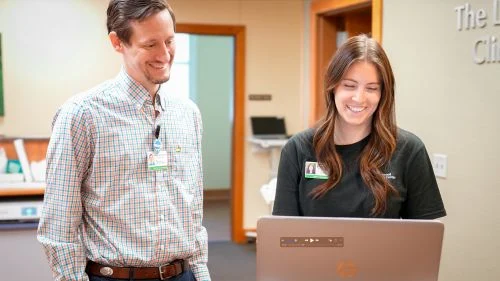 Thanks to the COVID pandemic, we are all now familiar with telemedicine and virtual visits, but GGC actually began its telemedicine program in 2016 to help make genetic visits more accessible across South Carolina. GGC’s investment in telemedicine, with early support from MUSC and the SC Telehealth Alliance, allowed for the development of a statewide telemedicine program that allowed patients to be seen virtually in an office near their home, and later directly from home (or wherever it was most convenient for them). While studies are still ongoing, the diagnostic yield for patients seen through telemedicine appears to be on par with in-person visits for most patients, removing the need for costly travel, extra time off work, or arranging for childcare. Even in the post-COVID era, GGC continues to see approximately 30% of patients virtually.
Beyond traditional telemedicine visits where the patient is meeting with the provider in real time, GGC has also created a system of eVisits with support from The Duke Endowment. eVisits are asynchronous communications between the patient and provider that are quick, convenient, and effective for certain subsets of patients. With an eVisit, patients and providers share messages, questions, and recommendations without a specific appointment time. eVisits have proven to be very valuable for many follow-up patients who already have a diagnosis and don’t require a physical examination, allowing for back-and-forth communication where providers can assess any new issues, provide recommendations for further care, and answer patient questions.
GGC has also developed workflows for specific patient groups where eVisits are often the most convenient and effective type of consultation to allow for the rapid initiation of genetic testing, avoid unnecessary consultations, and provide a convenient method for services. With the support of a grant from the SC Center for Rural and Primary Healthcare, eVisits are now being used effectively for infants referred for developmental challenges through BabyNet, patients with isolated hearing loss, and most recently, for patients who have a clinical diagnosis of autism without other developmental or medical issues.
eVisits are less time-consuming for providers, more convenient for patients, and leave in-person and virtual visit appointments for those who require physical exams or direct contact with providers, improving turnaround times for all. When genetic testing is recommended for a patient seen by either a virtual visit or eVisit, GGC can send a saliva collection kits to the patient’s home or arrange for a blood draw at a site convenient for the family.
Workforce Demands
The field of medical genetics is experiencing a workforce shortage across the nation. There are not enough MDs specializing in genetics to meet the demand leading to long wait times for patients. Improving the efficiency of visits through telemedicine and eVisits is one way to help and make sure patients receive timely services.
GGC is also leading efforts to build the medical genetics workforce through the addition of advanced practice providers (APPs) across our clinics. With leadership roles in APP organizations and promotion of genetics as a specialty through articles and presentations, GGC’s two physician assistants (PAs) Wesley Patterson, MSPA, PA-C, PhD and Laura Buch, MSPAS, PA-C are strong advocates encouraging PAs to specialize in genetics. With funding support from AmGen, GGC has also recently launched one of the first Medical Genetics and Genomics fellowship training programs for APPs in the country.
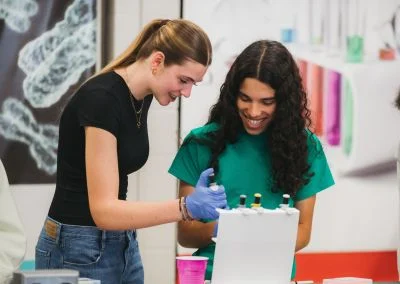 GGC’s Division of Education is also actively engaged in workforce development through the education outreach program. The innovative hands-on activities provided to middle and high school students across SC through the mobile science lab program is not only educating students about genetics, but also encouraging students to consider careers in genetics. Now in it’s 16th year of operation, the fruits of this work are being seen as many of our new employees recall being exposed to their career path and inspired by visits from GGC’s Gene Machine or Helix Express.
Awareness of Services
Another barrier to access is that often providers in other specialties may be unfamiliar with the genetics resources available to their patients and uncomfortable with ordering the complex testing on their own.
Through GGC’s system of eConsults, non-genetics providers are able to send information on their patient to a GGC provider and request advice or recommendations. The GGC provider may determine that the patient is not a good candidate for a genetics consult, thereby avoiding the time and expense of an unnecessary appointment. The GGC provider may also suggest first-tier testing that the non-genetics provider can order right away, speeding up the diagnostic process. GGC has offered eConsults to providers across South Carolina through ReferWell and also developed an eConsult platform within Epic for MUSC providers.
GGC has also developed a Medical Genetics Project ECHO to support non-genetics providers. This collaboration with MUSC’s Office of Continuing Medical Education produces high-quality virtual lectures on a variety of topics to educate non-genetics professionals on the genetics of more common conditions including epilepsy, hearing loss, and cardiomyopathies. The goals of Project ECHO are to support non-genetics providers in their care of patients with genetic disorders by identifying appropriate patients to refer, choosing the most appropriate genetic testing, and introducing them to GGC’s eConsult program as a patient care resource.
Cost
Cost can also be a barrier to patients having access to vital specialty care, genetic testing, and treatment options. New testing technologies and novel therapies often come with a hefty price tag, and even families with insurance can struggle to afford this care. GGC’s philosophy for the past 50 years has been to ensure that cost does not prevent patients from receiving the clinical care and testing that they need. To that end, the GGC Foundation started the GGC Cares Fund which provides financial assistance for genetic consultations, testing, and treatments for patient who are uninsured or underinsured. This fund is made possible due to generous gifts from GGC donors and through fundraising events such as Race the Helix.
To learn more about GGC’s Care Reimagined Campaign to support our Access initiatives visit ggc.org/foundation.